Research

FraGen: eDNA-based methods for assessing the genetic fragmentation of fish populations in federal waterways

Federal Institute of Hydrology (BfG), Department U4. Current project.

Details

Dams, weirs and other hydraulic structures fragment rivers and drive biodiversity loss in freshwater ecosystems. By restricting fish migration, these barriers reduce gene flow, increase genetic isolation and compromise the long-term resilience of populations. Fishways are commonly installed to restore connectivity, but their effectiveness is usually assessed with telemetry or capture-based surveys, which say little about genetic exchange. Traditional tissue-based genetic studies can fill this gap, but they are invasive, costly and impractical for large-scale monitoring.

FraGen aims to develop and validate a non-invasive framework based on environmental DNA (eDNA), the traces of DNA that fish shed into the water, for assessing the genetic diversity and population fragmentation of indigenous key fish species in German federal waterways. The project comprises five integrated work packages:

  1. Target species. Select species by ecological relevance, genetic tractability and suitability for controlled trials.
  2. Genetic markers. Identify and validate the best markers (mitochondrial DNA, microsatellites and SNPs) for eDNA-based population genetics, using tissue-derived reference datasets.
  3. Controlled experiments. Use artificial fish populations of known genetic composition (indoor flumes) to test whether eDNA captures genetic variation under varying species, density, age class, exposure time and suspended solids.
  4. Field validation. Compare parallel eDNA and tissue samples from free-flowing and dam-regulated river sections.
  5. Connectivity. Correlate the observed genetic patterns with historical fragmentation data to quantify ecological connectivity.

Once implemented, FraGen should provide a scalable framework for evaluating fish passage, monitoring genetic recovery and supporting evidence-based waterway management. We presented the conceptual design as a poster at an early stage of the project, to discuss the approach and exchange experience on eDNA-based population genetics in freshwater conservation.

Project team at the BfG: Dr. Shaolin Xu, Dr. Sascha Krenek, Dr. David Nijssen, Saskia Schmidt, Dr. Christian Burberg and Dr. Nicole Scheifhacken. PIs: Dr. Nicole Scheifhacken and Dr. Sascha Krenek. I work on the project in department U4.
eDNA · Fish · Population genetics · Fragmentation · Fishways

Genomic adaptation of Daphnia cucullata to elevated temperatures

Insights from power plant-heated lakes. Limnology and Oceanography, 2026.

Details

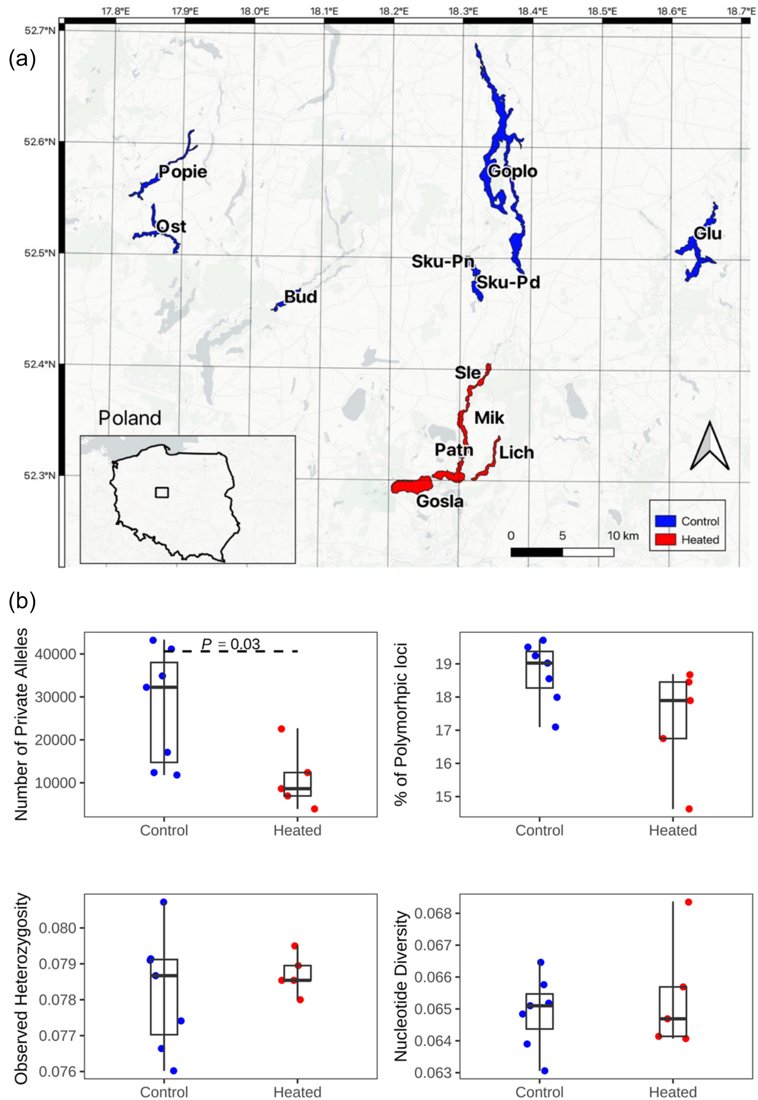
Genomic adaptation of the water flea Daphnia cucullata to elevated temperatures, studied in Polish lakes that are heated by power plants and in nearby unheated control lakes.

Map of sampled Polish lakes (heated and control) and population genetic diversity statistics
(a) Sampled lakes, heated (red) and control (blue); (b) population genetic diversity. Figure 1 from Xu et al. (2026), Limnology and Oceanography 71(9): e70498, CC BY 4.0.

S. Xu, J. Wolinska, M. K. Dziuba, S. Cerbin, M. Möst, L. De Meester (2026). The supporting information and analysis scripts are public: ShaolinXU/DcucuPolandThermalAdaptation.

Daphnia cucullata · Population genomics · Thermal adaptation

bioinfo_container

Docker image for population-genetics analysis in R.

Details

A Docker image for reproducible bioinformatic analysis. It is built on r-base and uses pak to install the R packages together with their system dependencies, including ape, vcfR, snpR, ggtree and plotly.

Source: ShaolinXU/bioinfo_container.

Bioinformatics · Docker · R

Daphnia on the Qinghai-Tibet Plateau

Population genomics and phylogeography of Daphnia magna and Daphnia tibetana (PhD, 2016–2021).

Details

PhD work at Jinan University (promoter: Prof. Dr. Bo-Ping Han).

  • Led a field campaign in Tibet to sample Daphnia tibetana populations (2018–2021).
  • Whole-genome resequencing of D. tibetana: spatial pattern of genetic diversity, population demography, and response to a salinity gradient.
  • Population genetics and phylogeography of D. magna from Tibet and the surrounding area (2016–2018).
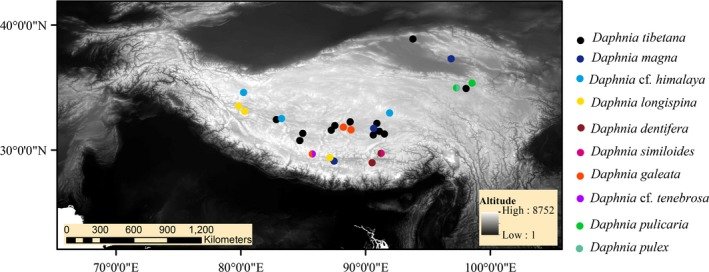
Sampling sites of Daphnia species across the Tibetan Plateau
Sampling sites of Daphnia species across the Tibetan Plateau (dot colour = species). Figure 1 from Xu et al. (2018), Ecology and Evolution 8: 5069–5078, CC BY 4.0.

Daphnia · Population genomics · Tibetan Plateau

Phylogenomics of Cladocera

Phylogenomic and mitogenomic study of Cladocera (Crustacea: Branchiopoda), 2018–2021.

Details

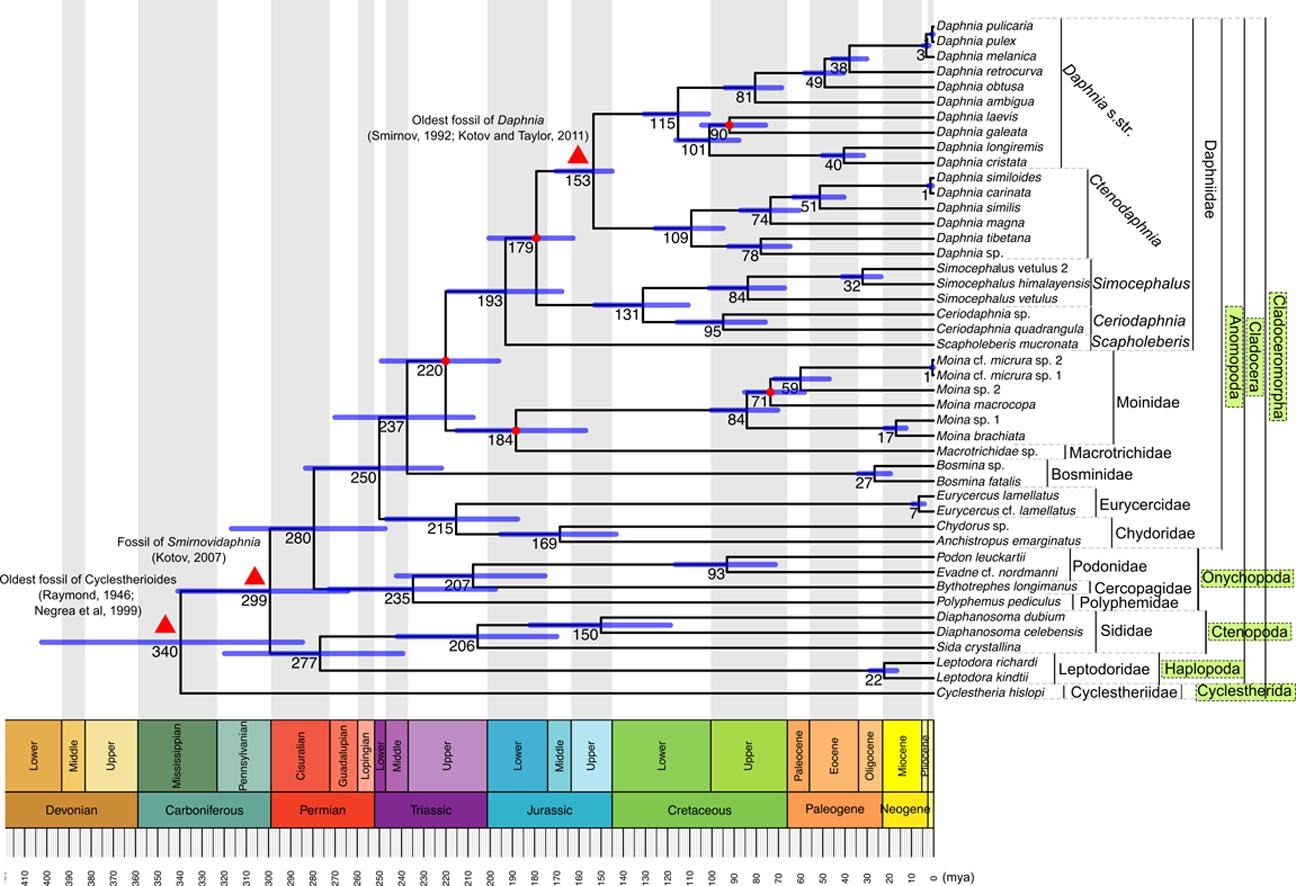
Phylogenomic study of Cladocera (Crustacea: Branchiopoda) at Jinan University, 2018–2021. Related paper: Mitogenomics of Cladocera (Branchiopoda): marked gene order rearrangements and independent predation roots, Molecular Phylogenetics and Evolution 164, 107275 (2021).

Time-calibrated phylogeny of Cladocera inferred from mitochondrial genomes, with divergence times in million years ago
Time-calibrated mitogenomic phylogeny of Cladocera (node labels: divergence times, million years ago; red triangles: fossil calibrations). From Xu et al. (2021), Molecular Phylogenetics and Evolution 164: 107275.

Cladocera · Phylogenomics · Mitogenomics